


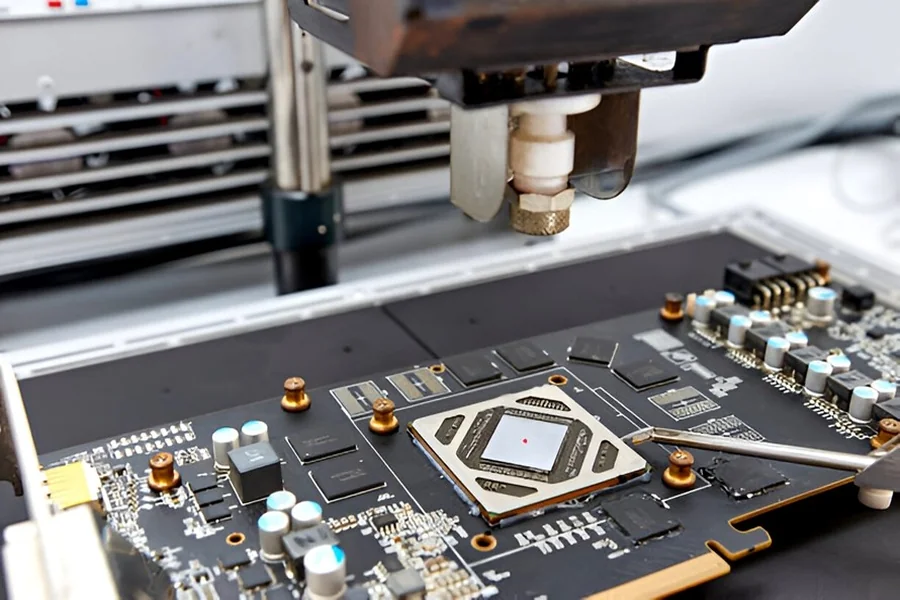
Rigid flex PCB assembly refers to the process of manufacturing and assembling printed circuit boards that combine both rigid and flexible substrates into one unified structure. Unlike traditional rigid PCBs or fully flexible PCBs, rigid flex boards bring together the mechanical stability of rigid layers and the bendability of flexible layers. This hybrid construction allows for compact, durable, and high-performance electronic designs that meet the demands of advanced applications such as aerospace, medical devices, automotive electronics, military equipment, and consumer gadgets.
Rigid flex PCB assembly is becoming increasingly important as products get smaller, smarter, and more technically complex. Designers rely on rigid flex technology to reduce wiring, enhance reliability, and achieve 3D configurations that are impossible with standard board layouts. The result is a highly integrated structure capable of withstanding vibration, continuous motion, and harsh environmental conditions.
What Makes Rigid Flex PCB Assembly Unique?
Hybrid Construction for Improved Performance
The combination of rigid FR-4 layers and flexible polyimide layers gives rigid flex PCBs a unique advantage. Flexible sections allow the circuit to bend and fold, while rigid sections support complex components like connectors, IC chips, sensors, and high-density mounting areas.
Reduced Interconnections and Stronger Reliability
Because rigid flex PCBs do not require separate connectors or wiring harnesses between rigid and flex units, the risk of solder joint failure decreases dramatically. Fewer mechanical connections mean better long-term reliability, especially in high-vibration environments.
Compact and Lightweight Design
Modern devices require smaller and lighter internal assemblies. Rigid flex PCB assembly enables efficient use of space by allowing layers to fold into 3D shapes, reducing overall device bulk while maintaining electrical integrity.
High Durability in Dynamic Environments
Devices that experience continuous motion or repetitive mechanical stress benefit from the flexible sections of rigid flex PCBs. These flexible zones handle bending cycles without cracking, ensuring long-term stability.
The Structure of a Rigid Flex PCB Assembly
Rigid Layers
Rigid segments generally use FR-4 or other reinforced materials to provide mechanical strength. These layers house components such as BGAs, microcontrollers, and high-density chips.
Flex Layers
Flex sections are made of polyimide films that offer excellent flexibility, heat resistance, and insulation. These layers enable bending and folding, eliminating the need for cables or harnesses.
Adhesives, Copper Foils, and Coverlays
High-quality adhesives bond layers together while flexible coverlays protect copper circuits during bending. The stack-up must be engineered to balance durability, flexibility, and electrical performance.
Plated Through-Holes and Vias
Connecting rigid and flex layers requires advanced via structures. Laser-drilled microvias, buried vias, and blind vias are commonly used to handle high-density routing.
Rigid Flex PCB Assembly Process
Design and Engineering
Rigid flex design requires careful planning. Engineers must consider bend radii, layer transitions, copper thickness, impedance control, and dynamic flex requirements. Simulation and prototyping are essential steps.
Material Selection
Choosing the right combination of FR-4, polyimide, adhesives, and copper thickness is critical. The materials must withstand thermal cycling, bending, and high-performance operating conditions.
Fabrication of Rigid and Flex Sections
During fabrication, the flexible layers are produced separately before being laminated with the rigid layers. Laser cutting, drilling, imaging, etching, and plating are performed with high precision to ensure proper alignment.
Component Assembly
The assembly stage involves SMT (surface-mount technology), through-hole mounting, BGA placement, and selective soldering. Flexible areas must be protected during reflow to avoid thermal deformation. Experienced technicians use fixtures to stabilize the board throughout the process.
Testing and Quality Control
Final testing includes electrical testing, functional testing, dynamic flex testing, and X-ray inspection of vias and BGA joints. Since rigid flex PCBs are used in critical applications, manufacturing standards must meet IPC-6013 and military-grade specifications.
Applications of Rigid Flex PCB Assembly
Aerospace and Defense
Rigid flex PCBs withstand extreme conditions, making them ideal for avionics, radar systems, satellites, and military communication equipment.
Medical Electronics
Medical devices such as pacemakers, imaging systems, and handheld diagnostic tools rely on rigid flex PCBs for reliable performance in compact structures.
Automotive Electronics
ADAS systems, sensors, control units, and infotainment modules use rigid flex PCB assembly for vibration resistance and long-term durability.
Consumer Electronics
Smartphones, tablets, cameras, and wearable devices benefit from rigid flex PCBs due to their ultra-compact design capabilities.
Industrial and Robotics
Automation systems and robots depend on rigid flex PCBs for reliable performance under repetitive motion and harsh industrial environments.
Benefits of Using Rigid Flex PCB Assembly
High Reliability in Harsh Environments
The integrated structure has fewer mechanical connections, minimizing failure points and increasing durability.
Improved Signal Integrity
With shorter interconnects and controlled impedance routing, rigid flex PCBs support high-frequency applications.
Cost Efficiency Over Long-Term Use
Although initial fabrication may be more expensive, the reduced need for connectors, cables, and maintenance lowers overall production and lifecycle costs.
Greater Design Freedom
Rigid flex boards enable engineers to create 3D assemblies that maximize space and performance inside compact devices.
Final Thoughts: Choosing the Right Partner for Rigid Flex PCB Assembly
Rigid flex PCB assembly delivers unmatched reliability, flexibility, and performance, making it ideal for advanced electronics across multiple industries. From improved durability to compact design advantages, rigid flex technology supports next-generation engineering needs. To ensure precision, quality, and long-lasting performance, partnering with a trusted expert like China PCBA provides the advanced engineering capabilities and manufacturing experience needed to bring even the most complex rigid flex PCB projects to life.
